
Celebrating the Hope of Christ - Part 1

🎧 Listen on the go: Audio Narrative of Part 1
This message gently explores what hope truly means from a biblical perspective and how our understanding of the future shapes the way we live today.
🧭 Introduction
As we explore this subject together, it is my prayer that you will gain a deeper understanding of how much Jesus loves you and how precious you are to our heavenly Father. The hope we have in Christ is not distant or abstract—it speaks directly to our fears, our waiting, and our future.
What Is Hope?
How we live today is directly shaped by what we believe about our future. When people live without hope, it affects every part of life—emotionally, spiritually, and relationally. We cannot live without hope. Hope gives direction to our lives and strength to keep going.
📖 Proverbs 29:18 (NKJV): “Where there is no vision, the people perish.”
Types of Hope We Will Explore
In this series, we will look at different types of hope:
Common or natural hope
Biblical hope
In the next message, we will go further and explore divine hope and eternal hope. Today, our focus is on understanding common and biblical hope.
What Is Natural (Common) Hope?
Natural hope is the kind of hope most people refer to in everyday life. It is an expectation or desire for something to happen—a belief that something good is possible. We say things like:
“I hope the weather will be good.”
“I hope I can go on a holiday.”
“I hope you have a great day."
We hope for our children to do well in life, for good health, and for financial stability. These hopes are not wrong.
God does not discredit natural hope. In fact, it is within God’s will for humanity to have hope for good things, because He cares for all people. God desires blessing, provision, and well-being for mankind.
Loss of hope, however, often leads people to destructive coping mechanisms—attempts to numb pain or escape despair.
When Hope Is Lost in Scripture
Scripture gives us many examples of what happens when people lose hope:
Abraham lost hope in God’s promise and resorted to having a child with Hagar.
The Israelites lost hope in the wilderness and turned to idol worship.
King Saul lost hope in God’s direction and stopped listening to the prophets.
Esau lost hope in his birthright.
Lot’s wife clung to the past and lost her life.
When hope shifts away from God, people begin to rely on the flesh, and destruction follows.
Hope and the World Around Us
Today, many people have lost hope in God and in life itself. Some turn to alcohol or drugs. Others hurt themselves or others. Some even lose the will to live.
This is where the children of God must step in. Jesus made it His mission to reach the outcast, the broken, and the demon-possessed. We are called to bring hope not only to those who are easy to love but also to those who are hurting and rejected.
God’s Desire for Human Hope
God wants people to have hope for good things:
Financial provision
Healthy relationships
Marriage and family
Reconciliation
Health and well-being
These hopes are part of God’s care for humanity. However, when hope becomes rooted in pride, power, or self-glory—such as the desire for dominance, fame, or control—it becomes flesh-driven and ultimately destructive.
Biblical Hope
Now we turn to biblical hope—the hope we see lived out in Scripture. Biblical hope is still connected to real-life needs, but it is anchored in God and expressed through prayer.
We see biblical hope in:
Hannah, who hoped for a child
Joseph, who hoped for freedom
Ruth, who hoped for marriage
Esther, who hoped for deliverance
The widow, who hoped for one more meal
Israel, which hoped for freedom from oppression
These hopes were brought before God in prayer.
Biblical hope is not wishful thinking—it is confident expectation rooted in God’s promises.
Biblical Hope Is Certain
In the Gospel of John, Jesus repeatedly uses the phrase “most assuredly”. Biblical hope is not “maybe” or “I hope so.” It is confident trust.
Scripture contains over 7,000 promises from God to humanity. These promises strengthen us in weakness, steady us in doubt, and lift us when we feel empty.
📖 Romans 15:4 (NKJV)
“For whatever things were written before were written for our learning, that we through the patience and comfort of the Scriptures might have hope.”
Hope That Is Anchored in God
King David often wrote from places of despair, yet he continually returned to hope in God.
📖 Psalm 39:7 (NKJV)
“And now, Lord, what do I wait for? My hope is in You.”
📖 Psalm 42:11 (NKJV)
“Hope in God; For I shall yet praise Him.”
David reminded himself to trust in God’s faithfulness. Each time God proved Himself faithful, David’s hope grew stronger.
Hope Looks Beyond What We See
📖 Romans 8:24–25 (NKJV)
“For we were saved in this hope… if we hope for what we do not see, we eagerly wait for it with perseverance.”
Hope desires change beyond our current experience. It recognises that we were designed for more than what we see right now. Our ultimate hope is rooted in all that Christ has secured for us.
This is why hope must be grounded in prayer. Through Christ, we approach God as children, trusting our Father to hear and respond.
Living With Hope
The woman with the issue of blood activated her hope when she reached out to Jesus. Her hope became reality. God delights in answering the hopes of His children.
When we focus only on what is in front of us, we lose hope. When we focus on God’s promises, hope is restored.
We serve a faithful God who loves us deeply.
A Gentle Moment of Reflection
As we reflect on this message, we are reminded that hope is not optional for the Christian life—it is essential. How we live today is shaped by what we believe about our future. When hope is lost, despair, fear, and confusion take its place. When hope is restored, strength, focus, and purpose return.
In this message, we have seen that:
Natural hope is part of God’s care for humanity and reflects His desire for people to experience good things in life.
Loss of hope often leads people to destructive paths, both in Scripture and in our world today.
Biblical hope is not wishful thinking, but confident expectation rooted in God’s promises.
Biblical hope is deeply connected to prayer because it trusts God to act according to His faithfulness.
The Scriptures were written to teach us patience, endurance, and hope, especially in seasons of waiting.
Hope becomes stronger when it is anchored in God rather than in circumstances. When we place our hope in God’s promises instead of what we can see, our perspective begins to change. We learn to live not by what is happening now, but by what God has promised for the future.
Personal Reflection
It is worth asking ourselves:
Where have I placed my hope?
Is my hope shaped more by circumstances, or by God’s promises?
Am I allowing Scripture and prayer to strengthen my hope during uncertain seasons?
God invites us to live with hope—not because life is easy, but because He is faithful. When our hope is anchored in Him, it becomes a source of endurance, peace, and confidence, even when the journey is challenging.
Continuing the Journey – Celebrating the Hope of Christ (Part 2)
In Part 1, we have focused on understanding hope—what it is, how it shapes our lives, and how Scripture reveals its importance. Yet the hope we have in Christ goes even deeper.
In Part 2, we will explore the divine and eternal hope found in Jesus Christ. We will look beyond natural and biblical hope to see how Christ Himself is the fulfilment of every promise, and how our hope is ultimately secured not just for this life, but for eternity.
If you would like to continue this journey and grow deeper in understanding the hope we have in Christ, we invite you to continue with Celebrating the Hope of Christ – Part 2.
A note from the speaker: "It is my prayer that as you engage with this message, you gain a deeper understanding of how precious you are to our heavenly Father. Remember, hope is not optional—it is essential for the journey ahead."
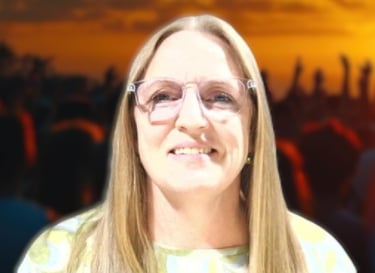
Ps Salome
Living Faith Community Church
Ps Salome is a leader dedicated to sharing the life-transforming message of Jesus Christ. Her heart is to help you move from a place of uncertainty into a confident, biblical expectation that is rooted in God's deep love for you.
"God invites us to live with hope—not because life is easy, but because He is faithful."
Kalamunda
Join us in faith, love, and fellowship.
kalamunda@lfcc.org.au
+61-452-260-374
© 2025. All rights reserved.


Worship
BIBLE TEACHING
Prayer
sHARE MEALS
celebrate together
COMMUNITY outreach
BUSH WALK
A vibrant Christian Community.
All Are Welcome ❤️
We meet every Saturday 5.00pm at
Jack Healey Centre
21 Mead St, Kalamunda WA 6076